

PCB Design
From PCB Design to Fabrication & Assembly
- PCB Design & Layout
- Electronics Design & New Production Introduction
- Component Sourcing & Turnkey PCB Assembly
- Prototype & Small to Medium Volume Production
- ISO9001:2015, Quality Certified
- No MOQ & Competitive Pricing
What is PCB Design?
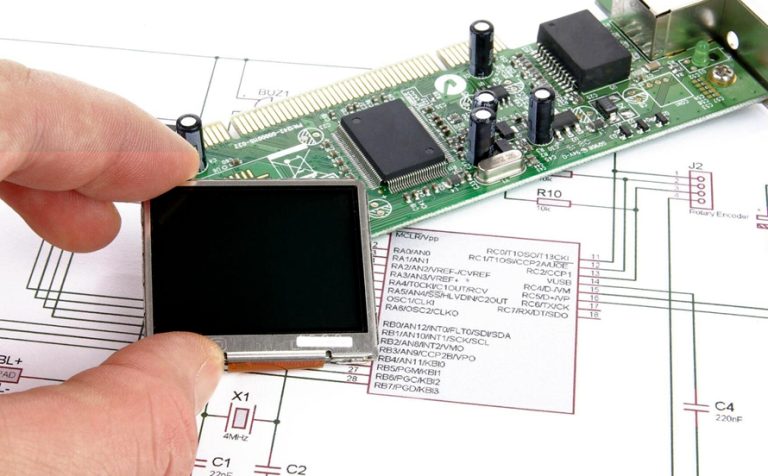
We understand that PCBs (Printed Circuit Boards) are at the heart of almost every electronic device, from everyday gadgets like watches to complex systems in aircraft. PCB design is both an art and a science, requiring a deep understanding of mechanics, electronics, economics, and aesthetics.
In the past, designing PCBs was a challenging task, even for simple designs, due to limited resources and the lack of advanced tools. However, with the advent of modern CAD (Computer-Aided Design) and EDA (Electronic Design Automation) tools, Gold Mate makes custom PCB design simpler, faster, and more efficient than ever before. These cutting-edge tools have expanded the capabilities of PCB design, allowing for faster data processing, operation in harsh environments, and the ability to fit smaller components into increasingly compact spaces. Additionally, modern PCBs can be mass-produced in virtually any shape or size.
What is PCB Design?
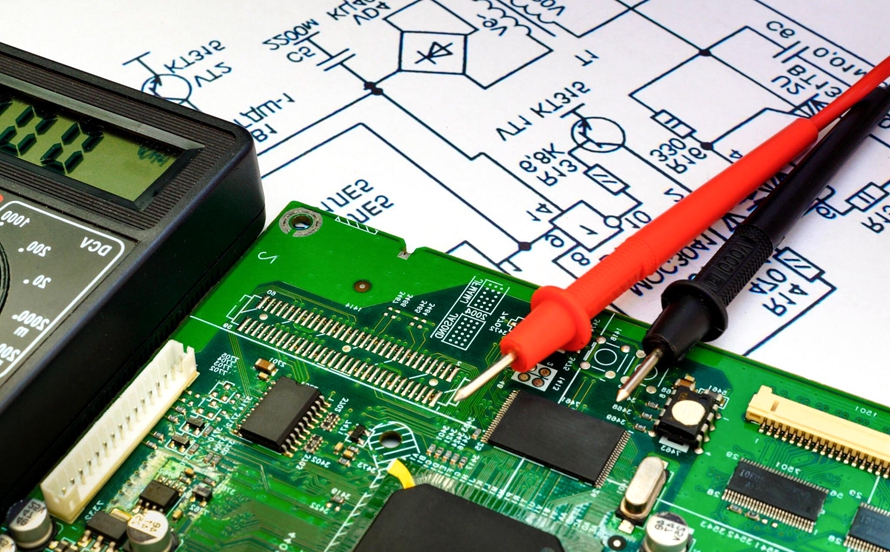
PCB design is more than just the process of creating a printed circuit board with conductive layers on a non-conductive substrate. While it may sound simple, the reality is far more intricate. The design process involves a delicate integration of multiple domains—electronics, mechanics, software, manufacturing, testing, and economics—all working together to create a flawless PCB. Achieving the perfect balance in each of these areas is key to building high-performance, reliable PCBs. Thanks to advancements in manufacturing capabilities and cutting-edge technology, complex PCB designs are now commonplace. Devices such as smartphones, wireless earphones, laptops, and TVs are prime examples of the sophisticated PCBs we craft at Gold Mate, showcasing our expertise in delivering precision and quality.
Factors Governing a Good PCB Board Design
Electrical Performances
Signal Integrity: Signal integrity refers to the quality of signals as they travel along their designated paths on the PCB. At Gold Mate, we prioritize high signal integrity to prevent signal loss or interference, ensuring that signals maintain their strength and clarity without being compromised by noise or distortion.
Power Distribution: Effective power distribution is essential for ensuring that all components receive the necessary power to function properly. Poor power distribution can lead to component malfunctions and excessive heat generation, which can damage the PCB. We carefully design power distribution systems to maintain efficient and stable power flow across the board.